
 Image 1 of 7
 Image 2 of 7
 Image 3 of 7
 Image 4 of 7
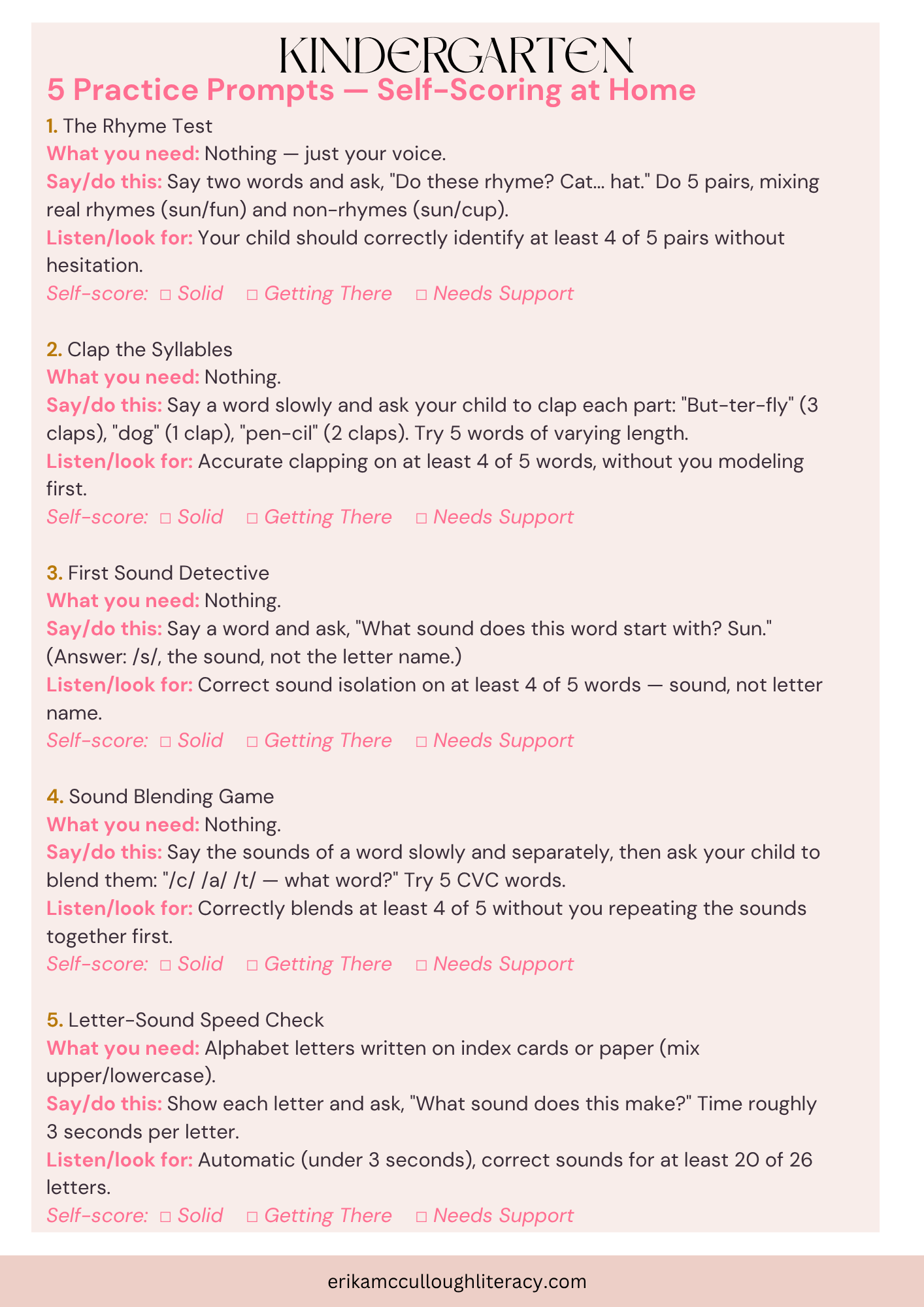 Image 5 of 7
 Image 6 of 7
 Image 7 of 7
Is My Child on Track? The K-5 Parent Literacy Checkup and Action Guide
Wondering if your child’s reading skills are where they should be?
It can be hard to know what’s typical, what needs a little extra practice, and when a reading struggle may be a sign that your child needs additional support.
Is My Child on Track? was created to take some of the guesswork out of that question.
This parent-friendly literacy workbook helps you understand what children are expected to know at each grade level, check important reading skills at home, track what you notice, and decide what your next steps should be.
No education degree required. Just clear information and practical tools designed for parents.
What's Inside
Your K–5 Parent Literacy Checkup & Action Guide includes:
Grade-Level Literacy Skills: Kindergarten–5th Grade
See important literacy skills children are developing at each grade level so you have a clearer picture of what your child is working toward.
Fluency Norms Reference Chart
Use the included reference information to better understand oral reading fluency expectations and how your child's reading compares with grade-level benchmarks.
At-Home Practice Ideas for Every Grade Level
Get practical ideas for supporting literacy at home based on your child's grade level—without trying to recreate the school day at your kitchen table.
Quick 5-Question Parent Screener
A simple check-in you can use with your child at home to gather additional information about important literacy skills.
No complicated testing setup required.
Parent Tracking Sheet
Record what you notice so you're not relying on memory or a vague feeling that your child "might be struggling."
Guidance for Understanding What You Find
The workbook helps you think through what your observations may mean if your child appears to be:
Developing as expected
Showing some areas that need strengthening
or
Showing significant skill gaps that deserve a closer look
You'll also get guidance on what to consider doing next.
How It Works
1. Start With Your Child's Grade Level
Review the grade-level skills to understand what children are generally working toward at your child's stage of literacy development.
2. Do a Quick Check-In
Use the parent screener and included tools to gather information about your child's current skills.
This isn't about creating a stressful testing experience.
Think of it as a literacy check-in—something you can do right at the dinner table.
3. Record What You Notice
Use the tracking sheets to document your observations and identify possible patterns.
4. Look at the Bigger Picture
Use the workbook guidance to determine whether your child's skills appear to be developing as expected or whether there are areas you may want to investigate further.
5. Know What to Do Next
Walk away with practical ideas for supporting your child at home—and a better understanding of when it may be appropriate to seek additional information or support.
This Workbook Is For You If...
You're the parent of a child in kindergarten through fifth grade and you've ever thought:
"I don't really know what my child should be able to do at this age."
"My child is struggling with reading, but I'm not sure how concerned I should be."
"I want to help at home, but I don't know what to practice."
"I want something more specific than 'just read with them.'"
"I'd like to have actual information before talking with my child's teacher or seeking additional support."
"My child seems to be doing fine, but I'd like reassurance that we're on the right track."
You don't need to become your child's reading teacher.
You just need to know what to look for, what questions to ask, and what your next step should be.
What This Workbook Is — And What It Isn't
Is My Child on Track? is an educational resource designed to help parents better understand literacy development, observe their child's skills, and make informed decisions about next steps.
It is not a formal reading evaluation, diagnostic assessment, medical or psychological evaluation, or substitute for individualized evaluation by a qualified professional.
A quick at-home check cannot tell you everything about a child's reading development.
What it can do is help you become a more informed observer of your child's literacy skills—and give you better information for deciding what to do next.
Created by Erika McCullough
Literacy support shouldn't feel like a secret language that only educators understand.
I created Is My Child on Track? to help bridge the gap between what educators know about literacy development and what parents are trying to figure out at home.
My goal is to give parents clear, practical information they can actually use—so they're better equipped to support their children, ask informed questions, and recognize when a child may need additional help.
Frequently Asked Questions
What ages is this workbook for?
The workbook covers literacy skills from kindergarten through fifth grade. You can focus on your child's current grade level while also using the surrounding grade bands to better understand skill development.
Do I need teaching experience to use it?
No. This resource was specifically created for parents, not educators.
The goal is to make literacy information understandable and useful without requiring specialized training.
Is the parent screener a formal reading assessment?
No. The included screener is an informal parent tool designed to help you gather information and notice possible areas of strength or concern. It should not be used to diagnose a learning disability, dyslexia, or any other condition.
What if I discover that my child has significant gaps?
The workbook includes guidance for thinking through your next steps. Depending on what you observe, that may include targeted practice, talking with your child's teacher, monitoring progress, or seeking a more comprehensive evaluation or specialized literacy support.
What if my child seems to be on track?
That's valuable information, too!
You'll still have grade-level practice ideas you can use to continue supporting your child's literacy development at home.
Is this a physical workbook?
No. Is My Child on Track? is a digital PDF download. You can view it digitally or print the pages you'd like to use.
Can I use this with more than one of my children?
Your purchase is intended for personal use within your immediate household. You may use your copy with your own children.
Please do not distribute, reproduce, share, upload, resell, or provide copies of the workbook to other families, classrooms, schools, tutoring clients, or organizations.
Important Educational Disclaimer
This resource is provided for educational and informational purposes only. It is not intended to diagnose, treat, evaluate, or rule out dyslexia, a learning disability, speech or language disorder, developmental condition, or any other medical, psychological, or educational condition.
The activities, questions, benchmarks, norms, and observations included in this resource should be considered alongside other information about your child's development and educational performance. Results from an informal at-home activity should not be interpreted as a diagnosis or comprehensive assessment.
If you have concerns about your child's reading development or academic progress, consider discussing those concerns with your child's teacher, school, pediatrician, or an appropriately qualified literacy or educational professional.
Wondering if your child’s reading skills are where they should be?
It can be hard to know what’s typical, what needs a little extra practice, and when a reading struggle may be a sign that your child needs additional support.
Is My Child on Track? was created to take some of the guesswork out of that question.
This parent-friendly literacy workbook helps you understand what children are expected to know at each grade level, check important reading skills at home, track what you notice, and decide what your next steps should be.
No education degree required. Just clear information and practical tools designed for parents.
What's Inside
Your K–5 Parent Literacy Checkup & Action Guide includes:
Grade-Level Literacy Skills: Kindergarten–5th Grade
See important literacy skills children are developing at each grade level so you have a clearer picture of what your child is working toward.
Fluency Norms Reference Chart
Use the included reference information to better understand oral reading fluency expectations and how your child's reading compares with grade-level benchmarks.
At-Home Practice Ideas for Every Grade Level
Get practical ideas for supporting literacy at home based on your child's grade level—without trying to recreate the school day at your kitchen table.
Quick 5-Question Parent Screener
A simple check-in you can use with your child at home to gather additional information about important literacy skills.
No complicated testing setup required.
Parent Tracking Sheet
Record what you notice so you're not relying on memory or a vague feeling that your child "might be struggling."
Guidance for Understanding What You Find
The workbook helps you think through what your observations may mean if your child appears to be:
Developing as expected
Showing some areas that need strengthening
or
Showing significant skill gaps that deserve a closer look
You'll also get guidance on what to consider doing next.
How It Works
1. Start With Your Child's Grade Level
Review the grade-level skills to understand what children are generally working toward at your child's stage of literacy development.
2. Do a Quick Check-In
Use the parent screener and included tools to gather information about your child's current skills.
This isn't about creating a stressful testing experience.
Think of it as a literacy check-in—something you can do right at the dinner table.
3. Record What You Notice
Use the tracking sheets to document your observations and identify possible patterns.
4. Look at the Bigger Picture
Use the workbook guidance to determine whether your child's skills appear to be developing as expected or whether there are areas you may want to investigate further.
5. Know What to Do Next
Walk away with practical ideas for supporting your child at home—and a better understanding of when it may be appropriate to seek additional information or support.
This Workbook Is For You If...
You're the parent of a child in kindergarten through fifth grade and you've ever thought:
"I don't really know what my child should be able to do at this age."
"My child is struggling with reading, but I'm not sure how concerned I should be."
"I want to help at home, but I don't know what to practice."
"I want something more specific than 'just read with them.'"
"I'd like to have actual information before talking with my child's teacher or seeking additional support."
"My child seems to be doing fine, but I'd like reassurance that we're on the right track."
You don't need to become your child's reading teacher.
You just need to know what to look for, what questions to ask, and what your next step should be.
What This Workbook Is — And What It Isn't
Is My Child on Track? is an educational resource designed to help parents better understand literacy development, observe their child's skills, and make informed decisions about next steps.
It is not a formal reading evaluation, diagnostic assessment, medical or psychological evaluation, or substitute for individualized evaluation by a qualified professional.
A quick at-home check cannot tell you everything about a child's reading development.
What it can do is help you become a more informed observer of your child's literacy skills—and give you better information for deciding what to do next.
Created by Erika McCullough
Literacy support shouldn't feel like a secret language that only educators understand.
I created Is My Child on Track? to help bridge the gap between what educators know about literacy development and what parents are trying to figure out at home.
My goal is to give parents clear, practical information they can actually use—so they're better equipped to support their children, ask informed questions, and recognize when a child may need additional help.
Frequently Asked Questions
What ages is this workbook for?
The workbook covers literacy skills from kindergarten through fifth grade. You can focus on your child's current grade level while also using the surrounding grade bands to better understand skill development.
Do I need teaching experience to use it?
No. This resource was specifically created for parents, not educators.
The goal is to make literacy information understandable and useful without requiring specialized training.
Is the parent screener a formal reading assessment?
No. The included screener is an informal parent tool designed to help you gather information and notice possible areas of strength or concern. It should not be used to diagnose a learning disability, dyslexia, or any other condition.
What if I discover that my child has significant gaps?
The workbook includes guidance for thinking through your next steps. Depending on what you observe, that may include targeted practice, talking with your child's teacher, monitoring progress, or seeking a more comprehensive evaluation or specialized literacy support.
What if my child seems to be on track?
That's valuable information, too!
You'll still have grade-level practice ideas you can use to continue supporting your child's literacy development at home.
Is this a physical workbook?
No. Is My Child on Track? is a digital PDF download. You can view it digitally or print the pages you'd like to use.
Can I use this with more than one of my children?
Your purchase is intended for personal use within your immediate household. You may use your copy with your own children.
Please do not distribute, reproduce, share, upload, resell, or provide copies of the workbook to other families, classrooms, schools, tutoring clients, or organizations.
Important Educational Disclaimer
This resource is provided for educational and informational purposes only. It is not intended to diagnose, treat, evaluate, or rule out dyslexia, a learning disability, speech or language disorder, developmental condition, or any other medical, psychological, or educational condition.
The activities, questions, benchmarks, norms, and observations included in this resource should be considered alongside other information about your child's development and educational performance. Results from an informal at-home activity should not be interpreted as a diagnosis or comprehensive assessment.
If you have concerns about your child's reading development or academic progress, consider discussing those concerns with your child's teacher, school, pediatrician, or an appropriately qualified literacy or educational professional.